#include <stddef.h>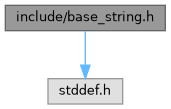
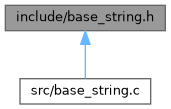
Go to the source code of this file.
Classes | |
| struct | string |
| Structure representing a dynamic string with capacity tracking. More... | |
Functions | |
| string * | string_create (const char *initial) |
Creates and initializes a new string instance. | |
| void | string_destroy (string *str) |
Destroys a string instance and frees its allocated memory. | |
| size_t | string_length (const string *str) |
| Retrieves the current length of the string. | |
| size_t | string_capacity (const string *str) |
| Retrieves the current capacity of the string buffer. | |
| void | string_concat (string *str, const char *suffix) |
Appends a C-string to the end of the existing string. | |
| int | string_compare (const string *str_1, const string *str_2) |
Lexicographically compares two string instances. | |
| void | string_clear (string *str) |
| Clears the contents of the string, resetting its size to 0 without reallocating memory. | |
| char * | string_to_c (const string *str) |
| Returns a pointer to the internal C-style null-terminated string. | |
| void | string_reserve (string *str, size_t new_capacity) |
| Ensures that the string buffer has at least the specified capacity. | |
| void | string_set (string *str, const char *new_value) |
Overwrites the current content of the string with a new value. | |
| int | string_contains (const string *str, const char *substring) |
| Checks if the string contains a specific substring. | |
| string ** | string_split (const string *str, const char *delimiter, size_t *num_tokens) |
| Splits the string into an array of tokens using a specified delimiter. | |
| void | string_replace (string *str, const char *old_substring, const char *new_substring) |
| Replaces all occurrences of a target substring with a new substring. | |
Function Documentation
◆ string_capacity()
| size_t string_capacity | ( | const string * | str | ) |
Retrieves the current capacity of the string buffer.
- Parameters
-
str Pointer to the string.
- Returns
- The total buffer capacity in bytes.
◆ string_clear()
| void string_clear | ( | string * | str | ) |
Clears the contents of the string, resetting its size to 0 without reallocating memory.
- Parameters
-
str Pointer to the stringto clear.
◆ string_compare()
Lexicographically compares two string instances.
- Parameters
-
str_1 Pointer to the first string.str_2 Pointer to the second string.
- Returns
- An integer less than, equal to, or greater than zero if
str_1is found, respectively, to be less than, to match, or be greater thanstr_2.
◆ string_concat()
| void string_concat | ( | string * | str, |
| const char * | suffix | ||
| ) |
Appends a C-string to the end of the existing string.
- Parameters
-
str Pointer to the destination string.suffix Null-terminated C-string to append.
◆ string_contains()
| int string_contains | ( | const string * | str, |
| const char * | substring | ||
| ) |
Checks if the string contains a specific substring.
- Parameters
-
str Pointer to the stringto search in.substring Null-terminated C-string to search for.
- Returns
- 1 if the substring is found, 0 otherwise.
◆ string_create()
| string * string_create | ( | const char * | initial | ) |
Creates and initializes a new string instance.
- Parameters
-
initial Null-terminated initial C-string. If NULL, an empty string is created.
- Returns
- Pointer to the newly allocated
string, or NULL on allocation failure.
- Note
- The returned pointer must be freed using
string_destroy().
◆ string_destroy()
| void string_destroy | ( | string * | str | ) |
Destroys a string instance and frees its allocated memory.
- Parameters
-
str Pointer to the stringto destroy. If NULL, no action is taken.
◆ string_length()
| size_t string_length | ( | const string * | str | ) |
Retrieves the current length of the string.
- Parameters
-
str Pointer to the string.
- Returns
- The number of characters in the string (excluding the null terminator).
◆ string_replace()
| void string_replace | ( | string * | str, |
| const char * | old_substring, | ||
| const char * | new_substring | ||
| ) |
Replaces all occurrences of a target substring with a new substring.
- Parameters
-
str Pointer to the stringto modify.old_substring Substring to be replaced. new_substring Substring to insert in place of old_substring.
◆ string_reserve()
| void string_reserve | ( | string * | str, |
| size_t | new_capacity | ||
| ) |
Ensures that the string buffer has at least the specified capacity.
- Parameters
-
str Pointer to the string.new_capacity Minimum required capacity in bytes.
◆ string_set()
| void string_set | ( | string * | str, |
| const char * | new_value | ||
| ) |
Overwrites the current content of the string with a new value.
- Parameters
-
str Pointer to the stringto modify.new_value Null-terminated C-string to set as the new content.
◆ string_split()
Splits the string into an array of tokens using a specified delimiter.
- Parameters
-
str Pointer to the stringto split.delimiter Null-terminated C-string used as the delimiter. num_tokens Pointer to a size_twhere the count of created tokens will be stored.
- Returns
- Pointer to an array of dynamic
string*tokens, or NULL on failure.
- Note
- Each element in the array must be destroyed individually using
string_destroy(), and the returned array pointer itself must be released usingfree().
◆ string_to_c()
| char * string_to_c | ( | const string * | str | ) |
Returns a pointer to the internal C-style null-terminated string.
- Parameters
-
str Pointer to the string.
- Returns
- Pointer to the underlying character array.
- Warning
- The returned pointer points directly to the structure's internal buffer. Do not attempt to free or directly modify this memory.